
It’s easy to assume that vitamins, being “natural” and widely available over the counter, carry no real risk in excess. But vitamin toxicity is a genuine, well-documented phenomenon — particularly for a specific group of vitamins. Here’s what you should actually know.
Which Vitamins Carry the Highest Toxicity Risk?
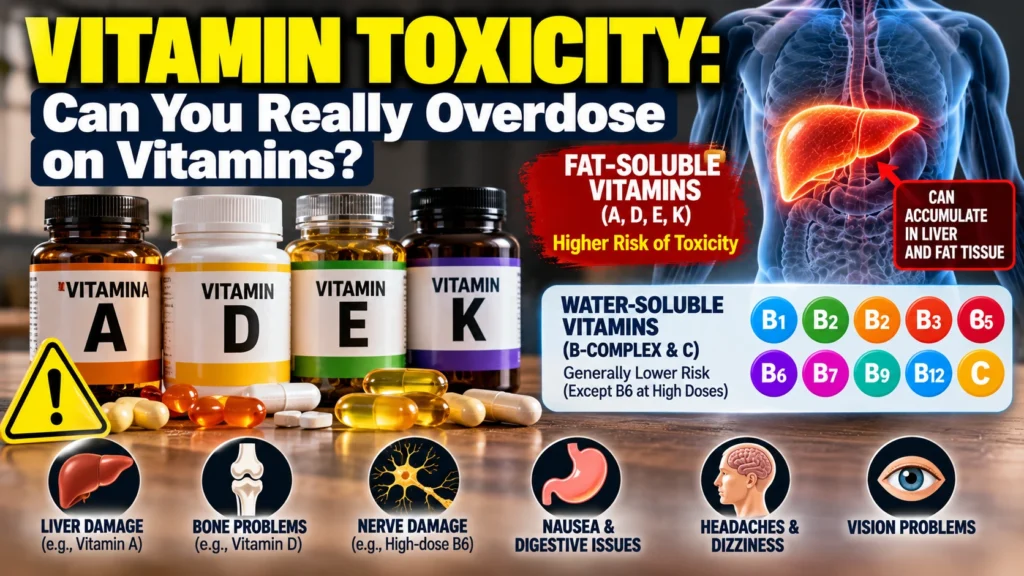
The fat-soluble vitamins — A, D, E, and K — carry the greatest risk of toxicity because the body stores them in the liver and fatty tissue rather than excreting excess amounts. Among these, vitamin A and vitamin D toxicity are the most well-documented and clinically significant.
Water-soluble vitamins (the B vitamins and vitamin C) are generally much lower risk, since excess amounts are typically filtered out by the kidneys and excreted in urine. The main exception is vitamin B6, where sustained high-dose supplementation has been linked to nerve damage.
Vitamin A Toxicity
Excess preformed vitamin A (from supplements or very high intake of foods like liver) can accumulate in the liver over time. Symptoms of vitamin A toxicity can include nausea, dizziness, headaches, blurred vision, hair loss, and in severe or chronic cases, liver damage and bone density loss. Acute, very high single doses can cause more immediate symptoms, while chronic excess tends to build gradually. Notably, beta-carotene from plant foods doesn’t cause the same toxicity risk, since the body regulates its conversion into active vitamin A.
Vitamin D Toxicity
Vitamin D toxicity is rare but almost always results from very high-dose supplementation sustained over weeks or months, rather than sun exposure or food (the skin has a natural regulatory mechanism that prevents sun-related overproduction). Excess vitamin D can cause dangerously elevated blood calcium levels (hypercalcemia), leading to symptoms like nausea, vomiting, weakness, frequent urination, and in severe cases, kidney damage.
Vitamin E and K
Vitamin E toxicity is less commonly documented but very high-dose supplementation has been associated with an increased risk of bleeding, since vitamin E can have mild blood-thinning properties. Vitamin K toxicity is quite rare, though supplemental vitamin K can interfere with blood-thinning medications like warfarin.
Water-Soluble Vitamin Considerations
While generally lower risk, some water-soluble vitamins still warrant caution at high doses:
Vitamin B6: Long-term high-dose supplementation (often well above 100 mg per day sustained over months or years) has been linked to peripheral neuropathy, causing numbness or difficulty with coordination.
Vitamin C: Very high doses (above the tolerable upper limit of 2,000 mg per day) can cause digestive upset like diarrhea and cramping, though serious toxicity is rare.
Niacin: High-dose niacin, sometimes used medically to manage cholesterol under supervision, can cause flushing, liver stress, and other side effects at doses well above typical dietary intake.
Why Toxicity Almost Always Comes From Supplements, Not Food
It’s genuinely difficult to reach toxic vitamin levels through diet alone, even a diet very rich in vitamin-dense foods — with the notable exception of very high liver consumption for vitamin A. Nearly all documented cases of vitamin toxicity involve high-dose supplements, often taken without medical guidance or in combination with multiple products that unknowingly overlap in the same nutrients.
How to Avoid Vitamin Toxicity
- Be cautious about combining multiple supplements that may contain overlapping nutrients (a multivitamin plus a separate vitamin D supplement plus a fortified protein powder, for example).
- Stick to recommended doses on product labels unless a healthcare provider has specifically advised otherwise.
- Be especially cautious with high-dose fat-soluble vitamin supplements (A, D, E, K), given their tendency to accumulate in the body.
- If you’re taking therapeutic, higher-than-standard doses for a diagnosed deficiency, do so under medical supervision with periodic monitoring.
The Bottom Line
Vitamin toxicity is a real risk, particularly for fat-soluble vitamins taken in high doses over time — but it’s also largely preventable. For most people eating a normal diet and taking supplements at standard recommended doses, toxicity is very unlikely. The risk rises specifically with high-dose, long-term supplementation taken without professional guidance.
This article is for informational purposes only and is not a substitute for professional medical advice.