

Before “isolate” and “hydrolysate” became common labels on protein tubs, whey protein concentrate was simply “whey protein.” It remains one of the most widely used and cost-effective protein supplements available. Here’s what it is and how it stacks up against other forms.
What Is Whey Protein Concentrate?
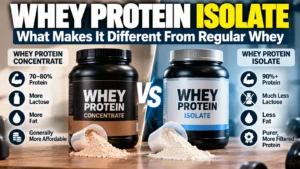
Whey protein concentrate is produced through a relatively straightforward filtration process applied to liquid whey — the byproduct of cheese-making. It typically contains 70–80% protein by weight, with the remainder consisting of carbohydrates (primarily lactose), fat, and other naturally occurring compounds from milk.
Because it undergoes less processing than whey isolate, concentrate retains more of these additional components, which some people believe may include beneficial compounds like immunoglobulins and other bioactive proteins naturally present in whey.
Nutritional Profile
Compared to whey isolate, concentrate generally contains:
- Slightly lower protein percentage by weight (70–80% vs. 90%+)
- More lactose, making it less suitable for those with lactose sensitivity
- More fat, contributing to a richer taste and texture
- A lower price point due to less extensive processing
Why It Remains Popular
Cost-effectiveness. Because it requires less processing than isolate or hydrolysate, whey concentrate is generally the most affordable whey protein option, making it accessible for regular, ongoing use.
Complete amino acid profile. Like other whey forms, concentrate provides all nine essential amino acids and is particularly rich in leucine, the amino acid most directly linked to triggering muscle protein synthesis.
Widely available and well-studied. As the original and most common form of whey protein, concentrate has been used in a large portion of the research supporting whey’s benefits for muscle building and recovery.
Who Should Consider Whey Concentrate?
- People without lactose sensitivity, who don’t need the reduced lactose content of isolate
- Budget-conscious consumers looking for an effective protein supplement without paying a premium for additional filtration
- People who prefer a creamier taste and texture, sometimes attributed to the slightly higher fat content
- Anyone using protein powder as a general dietary supplement rather than for strict macro tracking
Who Might Want a Different Form?
People with lactose intolerance may experience digestive discomfort from concentrate’s higher lactose content and might do better with whey isolate, hydrolysate, or a non-dairy protein source.
People strictly tracking macronutrients for a calorie-restricted diet may prefer isolate’s higher protein-to-calorie ratio.
Considerations When Choosing a Product
- Look for third-party testing to verify protein content and purity, since concentrate products can vary in actual protein percentage
- Check the ingredient list for added sugars or artificial additives if you’re aiming for a cleaner product
- Consider your own digestive tolerance to lactose before committing to a large container
The Bottom Line
Whey protein concentrate remains a highly effective, cost-effective way to boost protein intake and support muscle recovery, offering essentially the same core amino acid benefits as more processed and expensive whey forms. For most people without significant lactose sensitivity, it’s a practical, well-studied choice that doesn’t require paying a premium for additional filtration.
This article is for informational purposes only and is not a substitute for professional medical or nutritional advice.