
Few supplements are as widely used — or as widely misunderstood — as whey protein. Whether you’re new to the gym or just curious about what’s actually in that tub on your kitchen counter, here’s a clear breakdown of what whey protein is and how it fits into a healthy diet.
What Is Whey Protein?
Whey protein is a byproduct of the cheese-making process. When milk is curdled and strained, it separates into curds (used to make cheese) and a liquid called whey. That liquid whey is processed and dried into a powder that’s rich in high-quality, complete protein — meaning it contains all nine essential amino acids the body can’t produce on its own.
Whey protein comes in a few common forms:
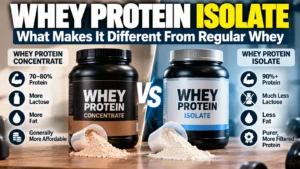
- Whey protein concentrate: Contains around 70–80% protein by weight, along with some fat and lactose.
- Whey protein isolate: More heavily filtered, typically 90%+ protein, with less fat and lactose.
- Whey protein hydrolysate: Pre-digested for faster absorption, often used in specialized or medical nutrition products.
Why People Use It
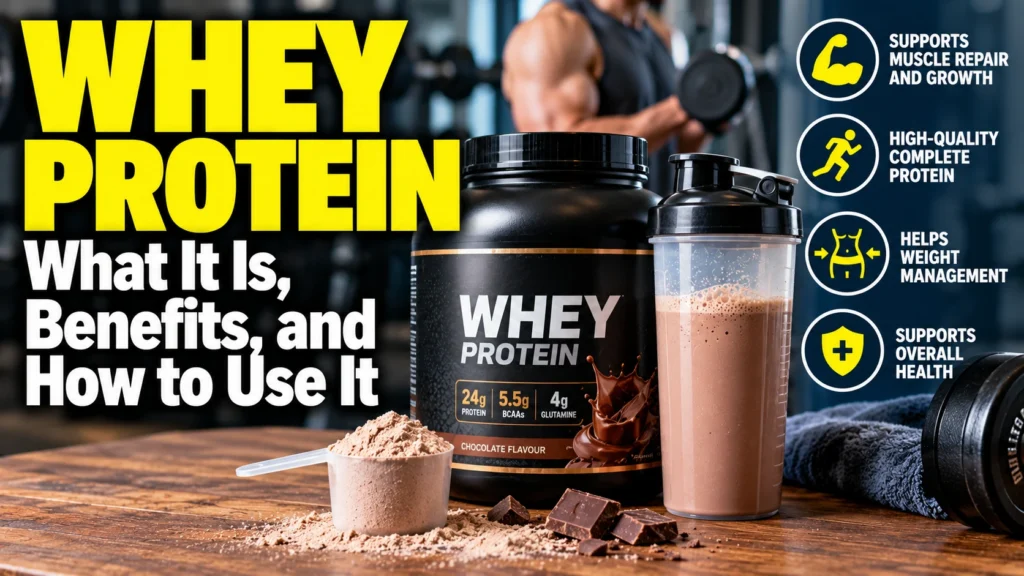
Muscle repair and growth. Whey is rich in leucine, an amino acid that plays a key role in triggering muscle protein synthesis — the process by which the body repairs and builds muscle tissue after exercise.
Convenience. Getting enough protein from whole foods alone can be difficult for people with high protein needs or busy schedules. A scoop of whey protein mixed with water or milk is a fast, portable way to add 20–30 grams of protein to a meal or snack.
Weight management support. Protein is more satiating than carbohydrates or fat, and adequate protein intake can help preserve lean muscle mass during weight loss, which supports a healthier body composition.
Recovery. Athletes and active individuals often use whey protein after workouts to support recovery, though the specific timing (“the anabolic window”) is less critical than once believed — total daily protein intake matters more than precise timing for most people.
Who Might Benefit Most
Whey protein can be useful for:
- Athletes and people who exercise regularly
- Older adults, who often need more protein to counteract age-related muscle loss
- People recovering from illness or surgery
- Anyone struggling to meet daily protein needs through food alone
It’s not a requirement for building muscle or staying healthy — whole food sources like meat, fish, eggs, dairy, and legumes can meet the same needs — but it’s a convenient tool for many people.
Things to Consider
Lactose intolerance. Whey protein concentrate contains lactose, which can cause digestive discomfort in people who are lactose intolerant. Whey isolate, with its lower lactose content, is often better tolerated.
Quality varies. Not all whey protein products are created equal. Look for products that have been third-party tested for purity and accurate labeling, since the supplement industry isn’t as tightly regulated as pharmaceuticals.
It’s a supplement, not a replacement. Whey protein is meant to supplement a balanced diet, not replace whole food sources of protein and the other nutrients they provide.
How Much Do You Need?
General protein recommendations range from 0.8 grams per kilogram of body weight (the standard baseline) up to 1.6–2.2 g/kg for people who strength train regularly, though individual needs vary based on goals, activity level, and overall health. Whey protein can help fill gaps, but it’s most effective as part of a well-rounded diet rather than a stand-alone solution.
The Bottom Line
Whey protein is a convenient, well-researched way to boost protein intake, particularly for active individuals. Choosing a quality product and using it alongside — not instead of — whole food protein sources will get you the most benefit.
This article is for informational purposes only and is not a substitute for professional medical or nutritional advice.