
If you’ve compared protein powder labels, you’ve likely noticed “isolate” carries a price premium over standard whey protein. Understanding what that extra processing actually buys you can help you decide whether it’s worth it for your goals.
What Is Whey Protein Isolate?
Whey protein isolate is a more heavily filtered and processed form of whey protein, typically containing 90% or more protein by weight. During processing, additional steps remove most of the fat, lactose, and other non-protein components that remain in whey protein concentrate, resulting in a purer, more concentrated protein product.
How It’s Made
Whey isolate typically undergoes additional filtration processes — such as microfiltration, ultrafiltration, or ion-exchange processing — beyond what’s used for standard whey concentrate. These processes strip away more of the carbohydrates (including lactose), fat, and other components, concentrating the protein content further.
Key Differences From Whey Protein Concentrate
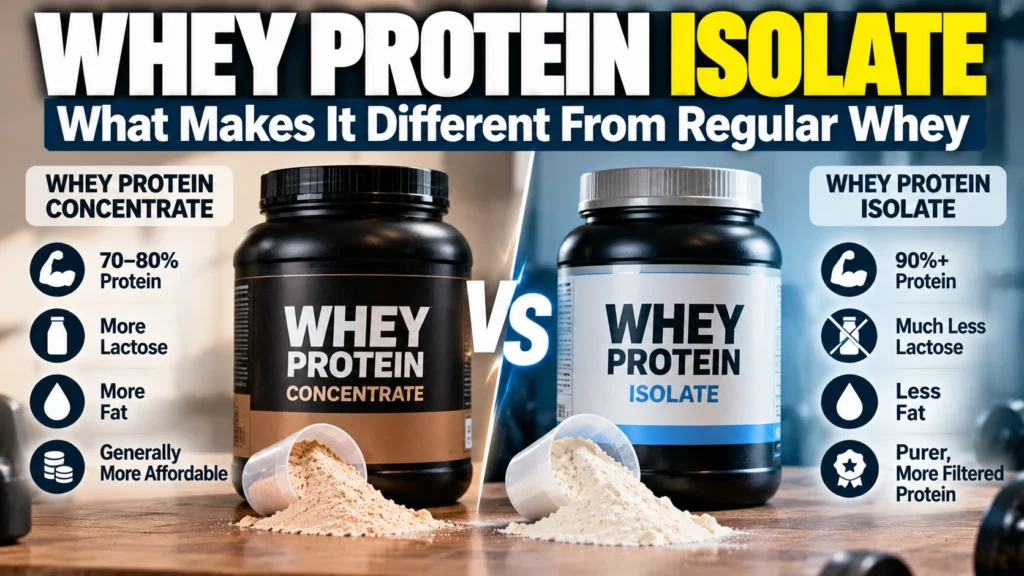
Protein content. Isolate typically contains 90%+ protein by weight, compared to 70–80% for concentrate.
Lactose content. Isolate contains significantly less lactose, making it a better option for people who are lactose sensitive but still want a whey-based protein rather than switching to a non-dairy source.
Fat content. Isolate generally contains less fat than concentrate, which some people prefer for calorie-conscious diets.
Cost. The additional processing required to produce isolate makes it more expensive than concentrate, gram for gram.
Taste and texture. Some people find concentrate has a slightly richer, creamier taste due to its higher fat content, while isolate can taste thinner or more processed to some palates.
Who Might Prefer Whey Isolate?
People who are lactose sensitive but not fully lactose intolerant, since isolate’s lower lactose content is often better tolerated.
People closely tracking macronutrients, such as those on a calorie-restricted diet, since isolate provides more protein per calorie with minimal fat and carbohydrate content.
People who prioritize a “cleaner” macro profile, wanting protein intake with minimal additional fat or carbs from their supplement.
Is Isolate Actually Better for Muscle Building?
For the primary goal of building muscle, research generally suggests both whey concentrate and isolate are effective sources of high-quality protein that support muscle protein synthesis, given their similar amino acid profiles and leucine content. The choice between them often comes down to individual factors like lactose tolerance, macro goals, and budget rather than a meaningful difference in muscle-building effectiveness for most people.
Considerations
Cost-effectiveness. For people without lactose sensitivity or strict macro tracking needs, standard whey concentrate often provides similar practical benefits at a lower price point.
Complete lactose intolerance. Even whey isolate contains trace amounts of lactose, so people with severe lactose intolerance may still need to consider whey protein hydrolysate or a non-dairy protein source like pea or soy protein.
Quality verification. As with any protein supplement, look for products that have undergone third-party testing to verify purity and accurate labeling.
The Bottom Line
Whey protein isolate offers a higher protein concentration with less fat and lactose than standard whey concentrate, making it a solid choice for people with mild lactose sensitivity or those closely managing their macronutrient intake. For most people focused simply on building muscle or meeting general protein goals, either form works well — the decision often comes down to budget, digestive tolerance, and personal preference.
This article is for informational purposes only and is not a substitute for professional medical or nutritional advice.