
Whey protein hydrolysate is the least common of the three main whey forms on store shelves, largely due to cost — but it offers some distinct characteristics worth understanding, particularly around digestion speed and tolerance. Here’s what sets it apart.
What Is Whey Protein Hydrolysate?
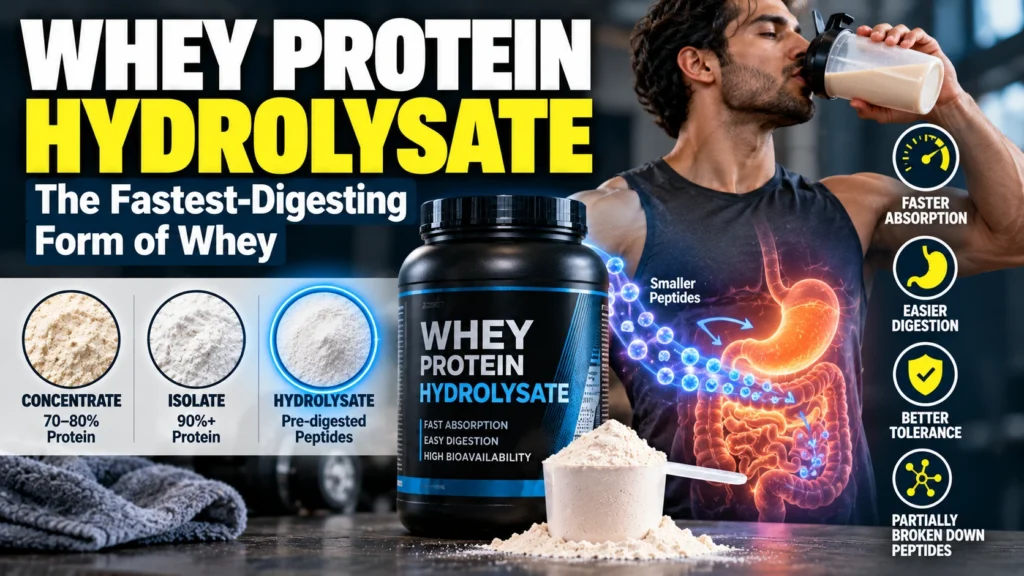
Whey protein hydrolysate is whey protein that has undergone a process called hydrolysis, in which the long protein chains are partially broken down into smaller peptide fragments before you consume them. This is essentially a head start on digestion — the body would eventually break these bonds down itself, but hydrolysis does some of that work in advance during manufacturing.
Why Hydrolysis Matters
Faster absorption. Because the protein is already partially broken down into smaller peptides, hydrolysate is generally absorbed more quickly than whey concentrate or isolate, which the body must break down more extensively after ingestion.
Reduced allergenic potential. The hydrolysis process breaks down some of the larger protein structures that can trigger allergic or sensitivity reactions, which is why hydrolyzed proteins are commonly used in specialized infant formulas designed for babies with milk protein sensitivities.
Easier digestion. Some people who experience digestive discomfort with other whey forms find hydrolysate easier to tolerate, since less digestive work is required to break it down.
How It Compares to Other Whey Forms
Vs. whey concentrate: Hydrolysate is more processed, more expensive, and faster-digesting, but concentrate retains more of whey’s natural components and costs significantly less.
Vs. whey isolate: Isolate is also relatively fast-digesting and low in lactose, but hydrolysate takes this further with its partially pre-digested peptide structure, generally at an even higher price point.
Does Faster Absorption Actually Matter for Muscle Building?
While hydrolysate’s faster absorption is well-documented, the practical significance for muscle building in typical resistance training contexts is less clear-cut than marketing sometimes suggests. For most people focused on general strength training and muscle building, total daily protein intake and consistent training matter far more than the specific absorption speed of a particular protein source. Hydrolysate’s speed advantage may be more relevant in specific clinical or highly specialized athletic contexts than for typical recreational exercisers.
A Notable Downside: Taste
Whey hydrolysate is well known for having a more bitter taste compared to concentrate or isolate, a direct result of the partial breakdown process exposing certain amino acids more directly to taste receptors. Manufacturers often use additional flavoring and sweeteners to offset this, but some people still notice a distinct bitterness compared to other whey products.
Who Might Consider Whey Hydrolysate?
- People with mild sensitivity to other whey forms who haven’t found relief with isolate
- Athletes in specific circumstances where very rapid protein absorption is prioritized, such as immediately post-exercise in certain competitive contexts
- People specifically seeking a product with reduced allergenic potential (though those with true milk allergies should still exercise caution, as hydrolysate is not necessarily fully hypoallergenic)
Cost Considerations
Because of the additional processing required, whey hydrolysate is typically the most expensive of the three whey forms. For most recreational exercisers and general fitness goals, this added cost may not translate into meaningfully better results compared to standard concentrate or isolate.
The Bottom Line
Whey protein hydrolysate offers faster absorption and potentially easier digestion due to its partially pre-broken-down structure, making it a reasonable option for people with specific sensitivities or highly specialized needs. However, for most general fitness and muscle-building goals, the practical benefit over less expensive whey concentrate or isolate is likely to be modest.
This article is for informational purposes only and is not a substitute for professional medical or nutritional advice.